
Point Roberts/Boundary Bay Regional Park C57

Point Roberts/Boundary Bay Regional Park C57
Touring Point Roberts in a loop (at most 25 kms including the loop around Boundary Bay Regional Park).
First, reach Point Roberts from Boundary Regional Park (see map – 3.6 km)
From the USA/Canada Border go west by reaching Roosevelt Way to follow the 49th Parallel Border. Because you cannot get on Roosevelt Way right at the border crossing, first go west on Mckenzie Way then north along Delano Way.
Features (note historical signage along the way)
* Canadian residences are right along the border on Roosevelt Way (do not cross over).
* Border Monuments along the way
* Monument Park at the west end marking the west end of the 49th Parallel Boundary.
* Head south on Marine Drive overlooking the west coast.
* At Gulf Road view Kiniki’s Reef and do check out Saltwater Café to take advantage of the best and often the only place to eat.
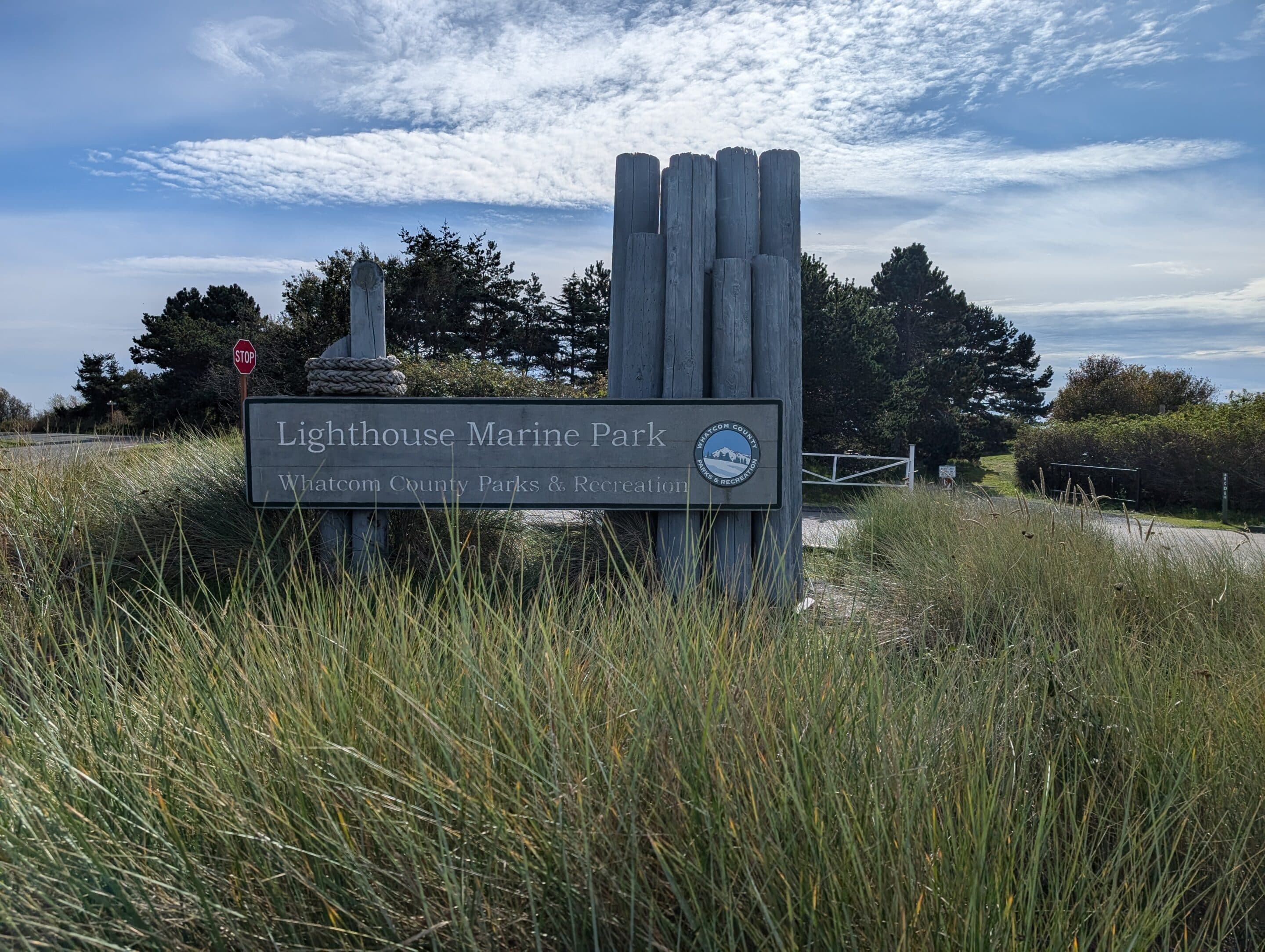
* Continue south to reach and tour Lighthouse Marine Park.
* Along the south route to Boundary Bay, go around the Marina to South Beach Up to Lily Point Marine Reserve where there were once major fish canaries and the fishing grounds of the Coast Salish First Nations.
* Continuing along the west sea shore there are view opportunities up to Maple Beach and back to Roosevelt Way taking you back to the border crossing.

Before doing this tour, we highly recommend that you view on YouTube the Backstory Tales, Trails and Trivia of Point Roberts by Mark Svenson, a talk from his book of the same title.

Combine this adventure with the Boundary Bay Regional Park and Centennial Beach as a 3.6 km Loop for these extraordinary features at this link:

Boundary Bay Regional Park, Delta, B.C.


The following link to this document gives great insights about the Boundary Bay Regional Park:
https://metrovancouver.org/services/regional-parks/Documents/boundary-bay-regional-park-plan-1996-10-01.pdf

PoCo Climb/Citadel Heights/Colony Farm WALKING/HIKING TRAIL LOOPS w30

PoCo Climb/Citadel Heights/Colony Farm WALKING/HIKING TRAIL LOOPS w30

The PoCo Climb is meant to go up a significant stair climb in the Citadel Heights area and is designed to be a 6.4 km loop.

Green POCO Climb Loop 6.42 km
Red Extensions or alternates

Eastern Coquitlam River Loop additions
Yellow 4.4 km
Red – PoCo Trail alternate 1.5 km
Red – Sheep Paddock Trail 1.6 km

Blue Colony Farm 4.4 km

Skwácháýs

Skwácháýs

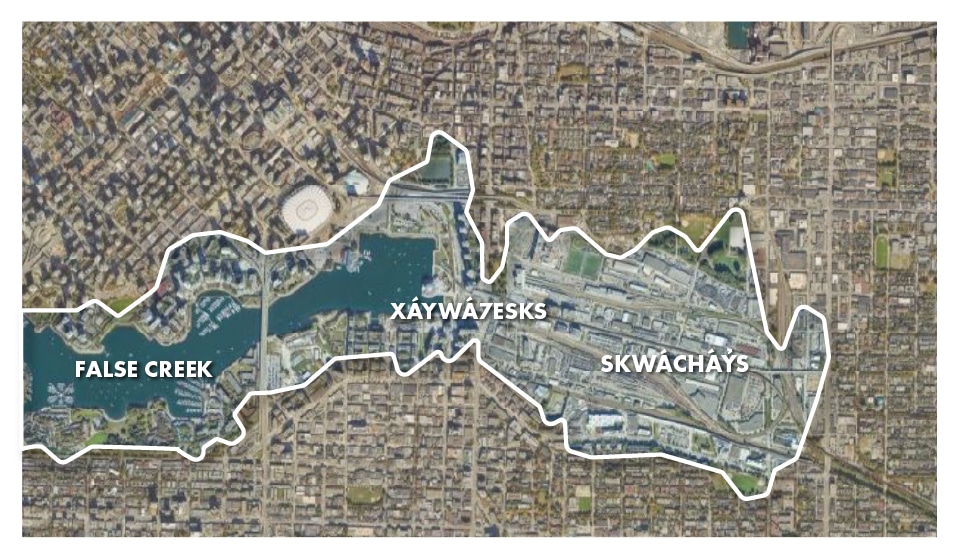
The waterfront of what is now known as False Creek looked very different pre-contact and had some very important landmarks to the Squamish Peoples. Laying beneath the urban blanket of Terminal Avenue is an ancient body of water known as Skwácháýs

Skwácháýs
[Sḵwá • cháýs]
place where water is drawn down into a hole; whirlpool (LM); water spring, or water coming up from ground beneath

áywá7esks
[X̱áy • wá7 • esḵs]
narrow passage (LM); two points exactly opposite (AJ)

“Long before the arrival of Europeans, the Skwácháýs area held a special significance for the local Indigenous peoples. We saw it as a land of abundance, where we could find everything needed to survive and thrive. The area was characterized by its lush salt marshes, teeming with life and nourished by underground springs that flowed up from the earth. These springs were not just seen as sources of water but also as portals to the spiritual realm. We considered Skwácháýs to be a place of transformative power, where we could connect with the spirit world and receive spiritual guidance and healing. For us, Skwácháýs was not just a place to live but a sacred site that held deep significance. It is a place where we could connect with our ancestors, the spirit world and nature, and it was believed that by doing so, we could improve our health and well-being.”

-James Harry

The Story of Skwácháýs

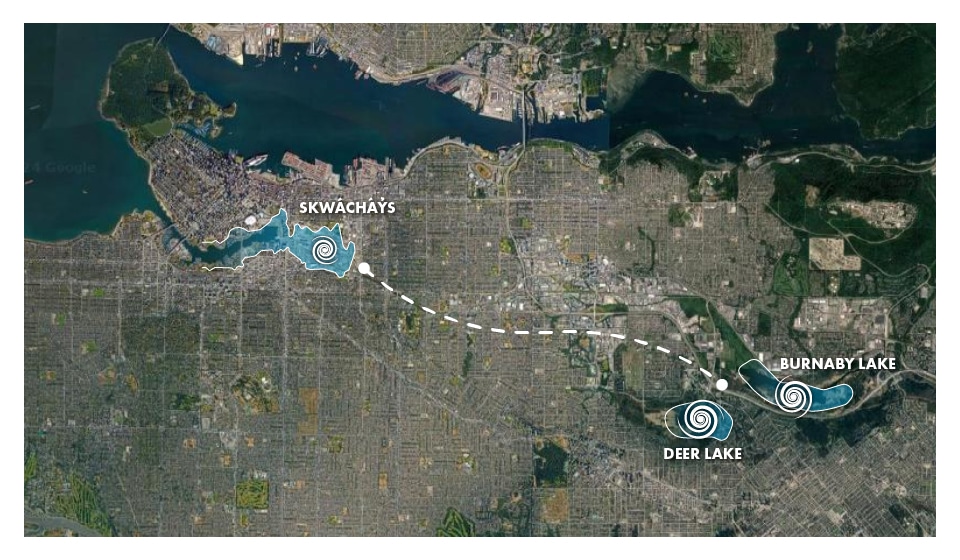
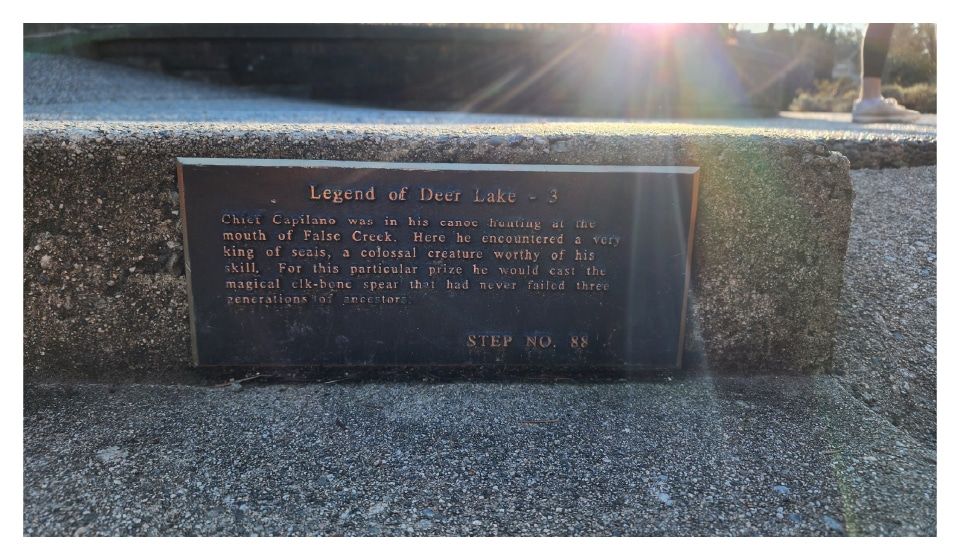
Skwácháýs was described as a place of whirlpools and portals. It is said to have been linked to bodies of water in the interior of Metro-Vancouver. One legend depicts a Sea Lion that was speared at Skwácháýs and later found around the Burnaby Lake/ Deer Lake area. 

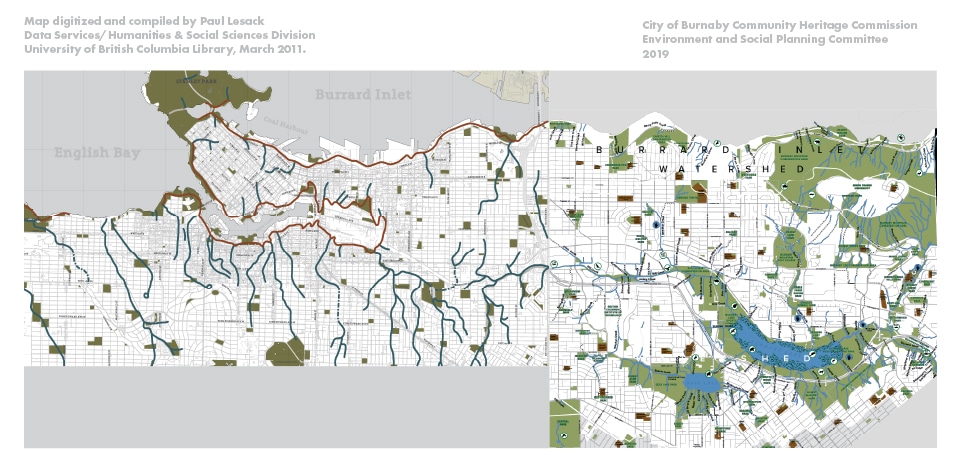
The following map shows both the coast-line of Vancouver pre-contact as well as lost streams that have been displaced or removed entirely. One can see how Skwácháýs may have been connected via stream networks to in-land Vancouver and Burnaby.

The Importance of Art on the Land

Although some aspects of this history have been acknowledged, there is still significant potential to share these stories more prominently. This could be achieved through initiatives like signage along bike routes or public art installations in key locations. Such efforts would support Truth and Reconciliation while also helping Metro Vancouver shape a distinct identity.

For Indigenous peoples, history has always been deeply tied to the land through storytelling and art. Important sites—whether for spiritual practice, resource gathering, or travel—were enriched with oral histories that gave them cultural significance. These stories taught boundaries between nations, seasonal practices, and warnings of danger. Without written records, this knowledge was passed down orally, connected to the land itself.

As the landscape has drastically changed, many of these features are now unrecognizable—Skwácháýs being a prime example. From the Coast Salish perspective, honoring this history in the modern context can be achieved by representing Coast Salish art on Coast Salish land.


Even in today’s modern world, connections to these historic areas can still be found through pathways like the Central Valley Greenway. This route reflects the interconnectivity of the region’s waterways, yet the stories tied to these places remain largely unknown. The spirit of Skwácháýs lies dormant, hidden beneath the urban sprawl that now covers much of Metro Vancouver.

To revive this spirit and honor these histories, we must take deliberate action. Public art, interpretive signage, and storytelling initiatives along these pathways can help bring these stories to light. Let’s work together to awaken these histories, fostering understanding and reconciliation while reconnecting the community to the land’s Indigenous roots.

Austin Aan’yas Harry is a Coast Salish Artist based in Vancouver BC, Canada. He is of the Wolf Clan from the Squamish Nation and Thunderbird Clan from the Namgis Nation.

From a young age Austin worked with his father Xwalacktun Rick Harry teaching youth about the history and culture of the Squamish people. Austin found a love for digital art and media through movies, comic books, and video games but saw a lack of representation of the culture he was so proud of.

He worked in the video game industry for a number of years before deciding it was time to work towards his dream of bringing indigenous culture to the mainstream through art and design. Indigital was founded with this goal in mind.

More on Austin and his art at: indigitaldesign.ca

Huy chexw a, thank you

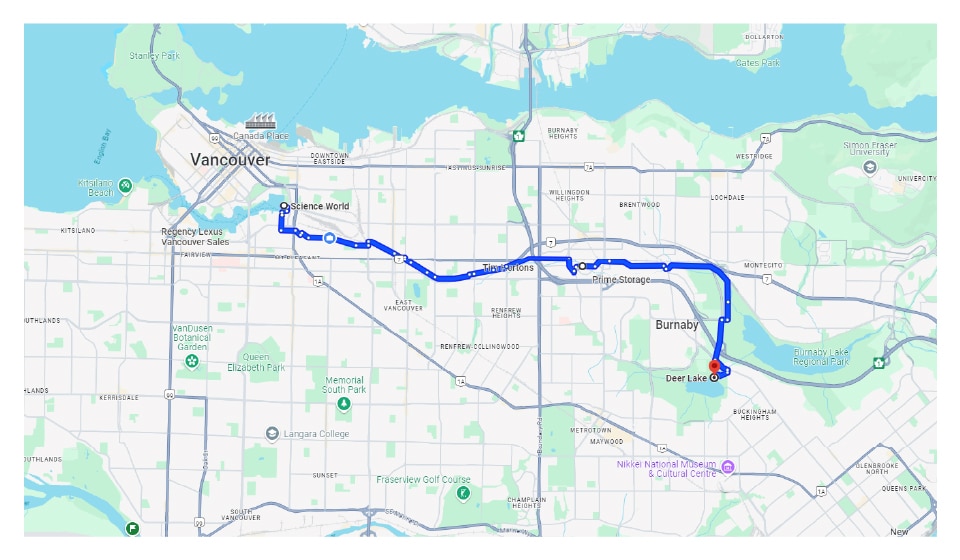
BC Parkway-Central Valley Greenways Loop c36a

BC Parkway-Central Valley Greenways Loop c36a

This Loop takes advantage of the two major Lower Mainland Greenways taking in streams, lakes, and parks.  It can be extended into even more urban settings adding numerous features by including the pink loop heading for False Creek and taking in Chinatown and/or the Italian Quarter along Commercial St.  Hence it takes in the City of Vancouver, Burnaby, and New Westminster.in a single journey.

Best done clockwise.

North Van City and Eastwards to Deep Cove c30a

North Van City and Eastwards to Deep Cove c30a

One should think of this tour being two smaller loops – one to the west of Lynn Creek (14k) and the other to the east towards Deep Cove (22k) in rewarding but quite challenging hilly terrain. The attempt is to connect as many greenway sections as possible via the shoulder of a number of roads. It is hopeful that one day this will become completely connected as a greenway.

• Main Features east of Lynn Creek
Seymour Creek
Seymour Parkway
Deep Cove Heritage village
Burrard Inlet and the start of Indian Arm
Murtle Park and paths
Cates Park
Tseil Watuth cemetery and reserve
Maplewood Flats (In the 1940s, Maplewood Flats was inhabited by a community of squatters living in dilapidated cabins along the area’s inter-tidal zone. One of the more prominent residents of the flats was English born poet and novelist Malcolm Lowry. Lowry was living in the flats while he wrote his novel Under the Volcano.)

• Main Features, City of North Vancouver
Seylynn Park (Lynn Creek)
Brigman Park (Lynn Creek)
Park Tilford
Spirit Trail
Moodyville
Lonsdale Quay Waterfront
The Green Necklace Greenway
Kings Mill Walk
Etc.