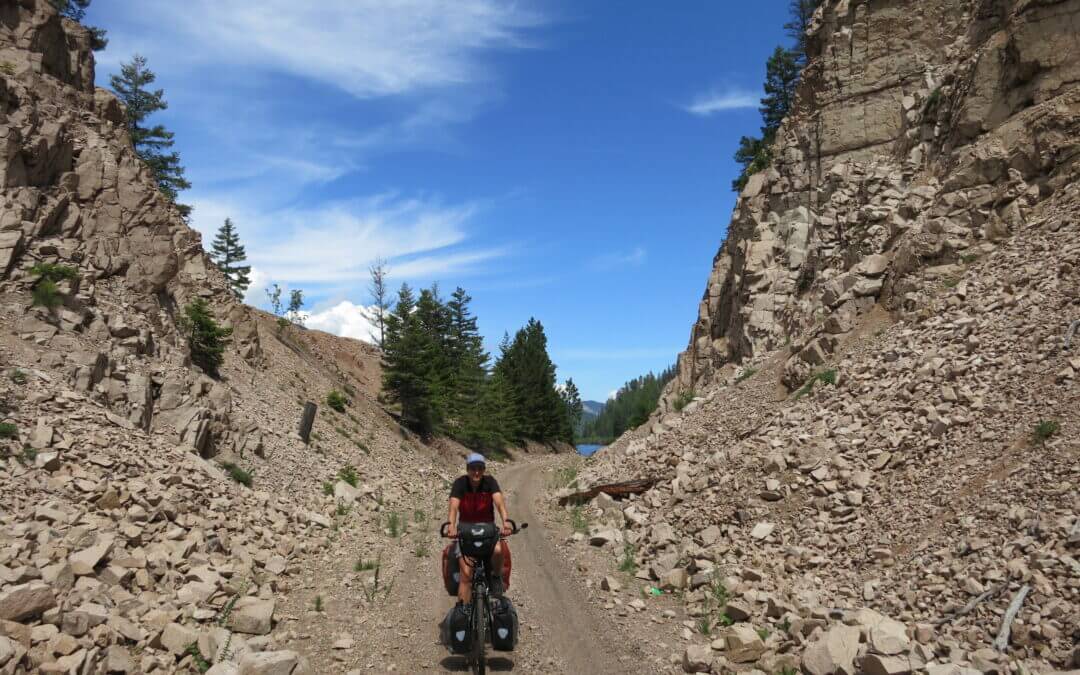
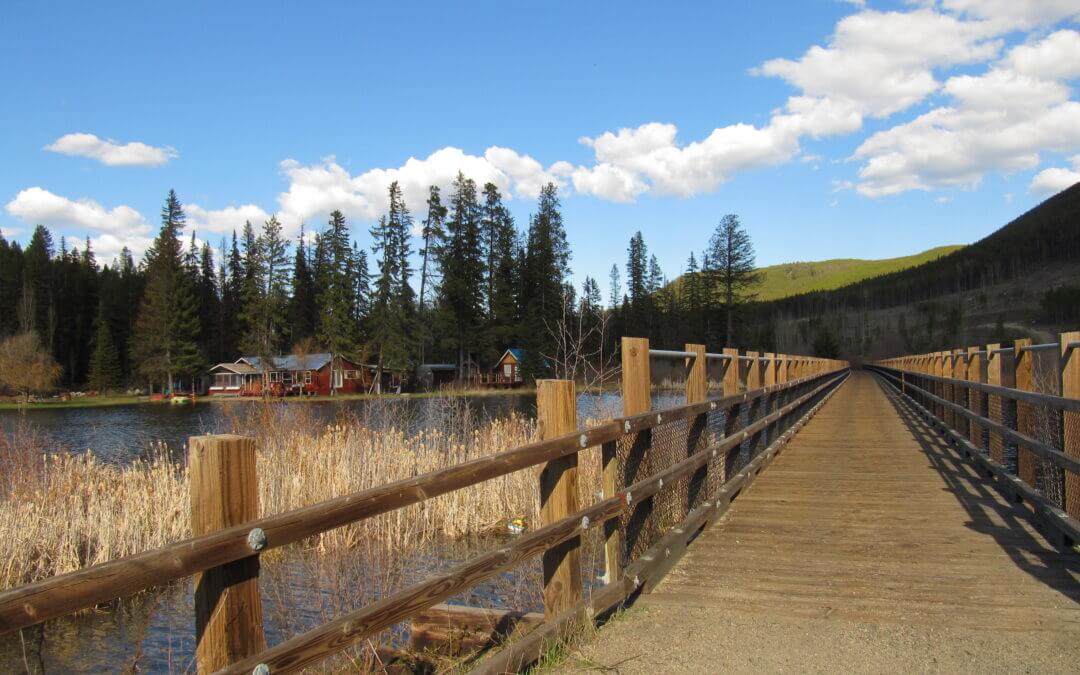
The Trans Canada Trail in the Princeton area is entirely on the Kettle Valley Railway. The area encompasses the communities of Brookmere, Tulameen and Coalmont to the west of the town of Princeton, and climbs into the grassy highlands on its way to Osprey Lake – home to many seasonal cabins and camp sites.
The scenery is quite unique along the trail, a particular treat for those traveling along the KVR from the Fraser Canyon – while the coast is shrouded in fog and rain, the interior is often warm and dry. Ponderosa pines and grass grow under the blazing sun and blue sky.
Important: You will almost certainly encounter motorized vehicles along the route, particularly ATVs and dirt bikes, which could be travelling at high speeds. Over the years, unregulated motorized use has degraded the trail surface along the Kettle Valley Railway, making many areas quite challenging for hikers and cyclists. Users should come prepared for sandy conditions. Please see our equipment recommendations on the Okanagan main page or even more detail on our “Equipment Tips” page of our Travel Tips.
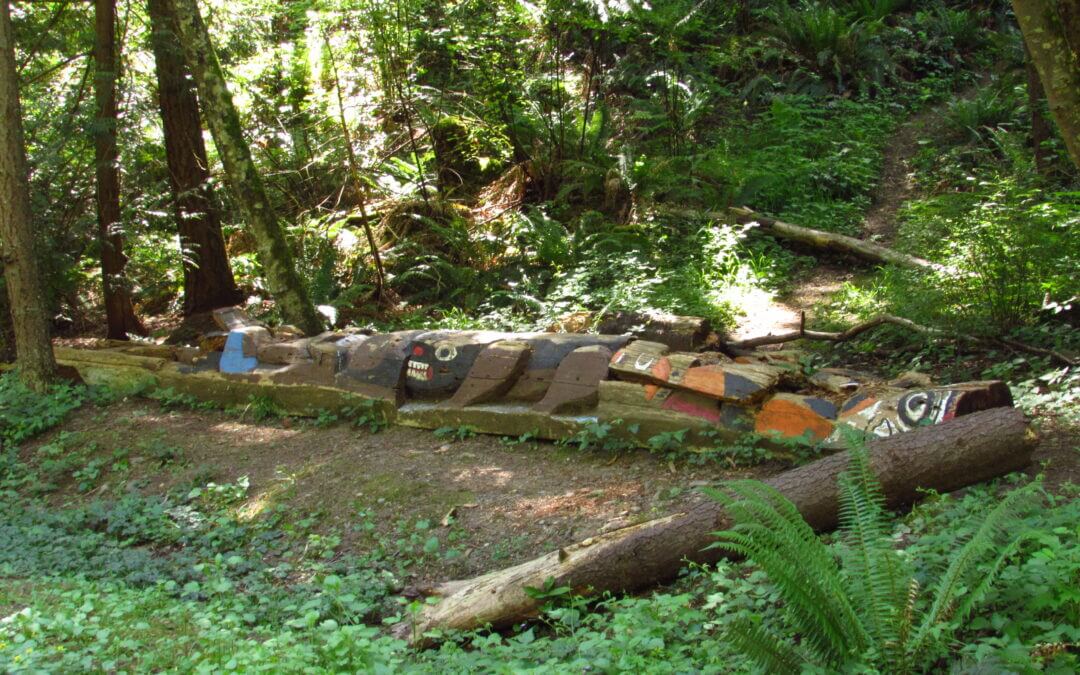
This section of the Trans Canada Trail passes through the communities of Cassidy, Extension and city of Nanaimo. Nanaimo is the second largest city on Vancouver Island and the hub through which much of Vancouver Island’s commerce connects to the mainland. On the Island, Nanaimo is a crossroad providing access to travel and adventure north, south and west. Nanaimo was known as a coal-mining town in the mid-1800 and developed strong logging and fishing industries.
The trail between Cassidy (Haslam Creek) and the outskirts of Nanaimo (Highway 19 and Harewood Mines Rd) is considered primarily to be a hiking-oriented route, though many sections are well suited to those on sturdy hybrid or mountain bikes. Those on touring bikes should consider a bypass to this whole area as outlined on our map, such as the Parkway Trail.
The trail through the city is a pleasant combination of forested walking paths, urban commuting routes, nature parks and waterfront trails. A Trans Canada Trail pavilion is located near the Vancouver Island University in the southwest corner of the city. The trail connects directly to the Departure Bay ferry terminal, where travelers can travel to Horseshoe Bay, on the mainland in West Vancouver. Travelers having to wait overnight for a ferry might want to check out Newcastle Island Marine Provincial Park This 336 hectares reserve located right in Nanaimo Harbor is accessible by a 10 min ferry ride leaving from Maffeo-Sutton Park, just north of downtown Nanaimo (south of the ferry terminal), and offers fine camping and facilities.
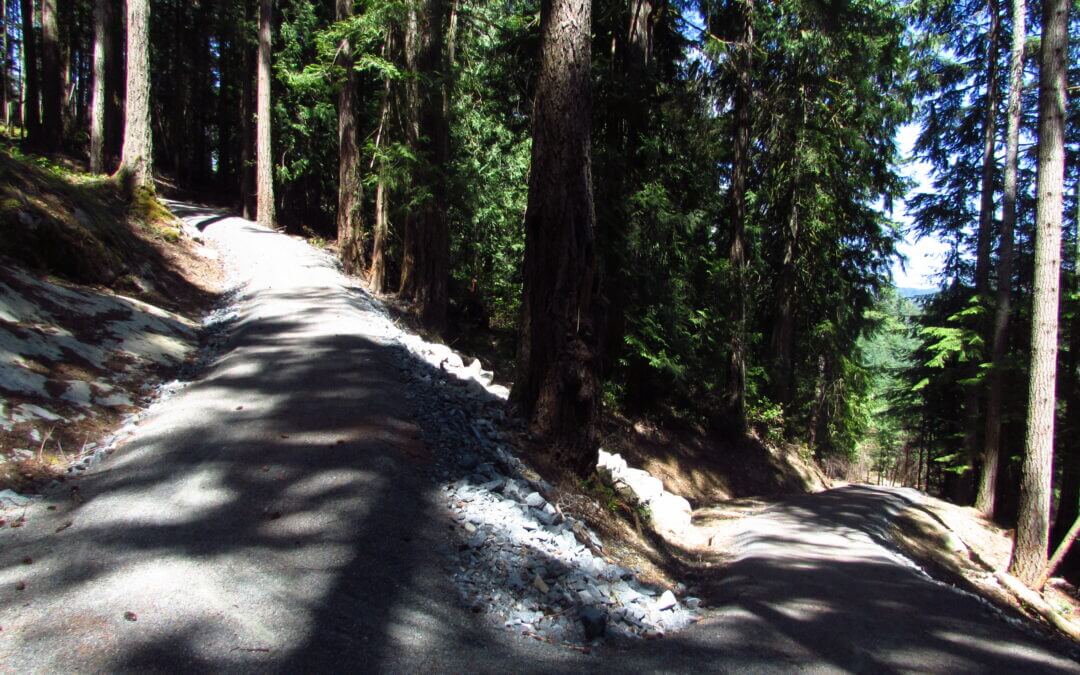
The Cowichan Valley boasts the highest mean temperatures in Canada and its rainforests are home to some of the world’s tallest trees. The Trans Canada Trail travels through these forests, primarily following rail trails. The route is easy to follow and accessible to virtually all levels of physical fitness. The trail surface is mostly well packed finely crushed gravel and is easy to ride, walk or jog along. Equestrian use is permitted in many areas, but not everywhere. The trail also passes through quaint seaside villages such as Saltair, Chemainus and Ladysmith. The region’s hub of activity centres around the city of Duncan.
An important note about the route between Shawnigan Lake south to Victoria; the route over the Malahat involves some very challenging climbs. For cyclists hauling trailers or panniers, it may well be in your best interests to use our Bypass Route, particularly for those travelling south (the grades between Sooke Lake Road and the CRD watershed are especially tough in this direction. The bypass route will lop off a great deal of Trans Canada Trail, including about 13 km of perfectly pleasant rail trail along Shawnigan Lake, but it uses a combination of fairly quiet roadways, urban trails and a nice ferry ride. At the north end, it connects to the Cowichan Valley Trail at the NW corner of Shawnigan Lake on Renfrew Road. At the south end, it connects to the Galloping Goose just north of downtown at Interurban Road.
Note: Work by the Cowichan Tribes owned Khowutzun Development Corporation will start on Monday, Aug. 26, 2024, and finish by mid-September 2024.
The trail will be fully closed starting Sept. 3, 2024, between Glenora Trailheads Park and the east side of Holt Creek Bridge during this time, with no detour available. The area will be closed for as much as two weeks. While pre-works are underway, trail users are encouraged to use other parts of the Cowichan Valley Trail.
One option is to check on our maps for those who want to include the Kinsol Trestle on the way to Cowichan Lake via Deerholme through Duncan avoiding to take the Highway.
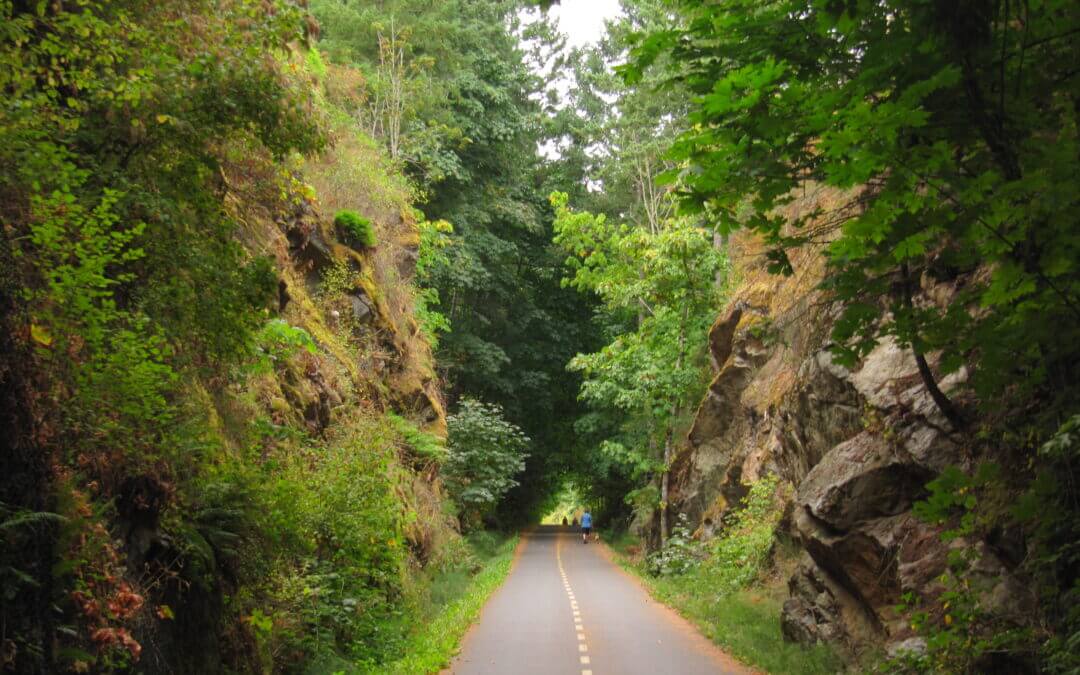
Victoria is the largest city on Vancouver Island and is the capital of British Columbia. The region includes many municipalities that have grown together into an area known as Greater Victoria. Victoria is a popular tourist spot, famous for its “British” character, gardens, and moderate climate. A must see for new visitors to the city is the Royal BC Museum. Much of the Trans Canada Trail in the Victoria area follows established regional trails, mostly on the famous Galloping Goose rail trail.


Recent Comments